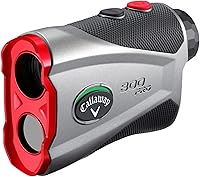
Golf Rangefinder With GPS: Is a Hybrid Worth It?
A golf rangefinder with GPS is worth it if you want the flag distance and the green layout on one device. Skip a hybrid if you only need the flag number, or if you already wear a GPS watch you like.
On this page (10 sections)
- What a golf rangefinder with GPS adds to a laser
- How the laser and GPS numbers differ
- Who should buy a hybrid?
- A hybrid or a separate laser and watch?
- The four hybrids side by side
- The four hybrids in this guide, one by one
- Where a hybrid makes less sense
- What a hybrid cannot do
- Five checks before you buy a hybrid
- Is a golf rangefinder with GPS worth it for you?
A golf rangefinder with GPS puts two kinds of yardage on one device. You get the exact laser number to a flag, plus the front, middle and back distances from a course map.
This guide explains what a laser-GPS hybrid adds, who it suits and when a separate laser and watch still makes more sense. It also walks through four hybrids, one at a time, with their features and trade-offs.
We compared the specs for each unit and read what each maker says about it. Where a figure is a maker's claim, the text says so.
What a golf rangefinder with GPS adds to a laser
A GPS layer adds front, middle and back yardages from a course map, plus hazard and layout views, to the exact flag number a laser gives. That's the whole idea behind a hybrid.
A plain laser reads only the target you aim at. A hybrid can also show the green's depth and the hazards around it, even when you haven't aimed at them.
What a golf rangefinder with GPS shows on each hole
The front, middle and back numbers show distances to the edges and the center of the green. They help you judge depth, such as how far to carry a bunker or where a shot should land short of the green.
Hazard views add another layer. Garmin's Approach Z82 has a hazard view that lets you scroll through each hazard on the map, so you can see the trouble before you pick a target.
Measuring between two points
MILESEEY's G1 has a Ball to Pin mode that measures between two points you tap on the screen. That helps when you want the distance from your ball to a water carry or a bunker edge, not just to the flag.
How the laser and GPS numbers differ
The laser reads the flag you aim at, while GPS reads the green's mapped position, so the two numbers can differ on the same shot. Knowing which number answers which question is what makes a hybrid worth carrying.
For the flag, use the laser number. For the depth of the green or a layup line, the GPS number gives you the bigger picture.
Slope on a hybrid
Bushnell says the Tour Hybrid applies slope to both its laser and its GPS distances, and its slope switch turns both on or off together. That keeps the two numbers in step on a hill.
MILESEEY says the G1 has an external rotating switch that turns slope off, and Blue Tees says the Captain Pro can toggle slope, wind, elevation, temperature and humidity. Under the standard Rules of Golf a device may measure distance only, so check your event's rule before you use any of those readings.
Are golf rangefinders legal? explains the rule in plain words.
If slope matters most to you, the best golf rangefinders with slope lists the slope models on their own.
Who should buy a hybrid?
A hybrid suits golfers who want one device for the flag and the course map, and who are comfortable with one unit doing two jobs. If that sounds like you, the rest of this guide shows which model fits best.
Golfers who want one device on the cart
One unit means one device to charge or power, one case to carry and one screen to check. That simplicity is the main case for a hybrid.
Golfers who like to see the whole hole
A map-based screen shows where the green sits, the hazards around it and the yardage to each point. If you plan a shot from the layout, a hybrid gives you that picture on the same unit as the flag number.
Golfers who play unfamiliar courses
A preloaded course library means the unit already holds the map when you reach a course you haven't played. Bushnell says the Tour Hybrid recognizes the course automatically, and the other three hybrids carry libraries of 41,000 to 43,000 courses.
Golfers who already wear a watch
If you already use a GPS watch, a hybrid can repeat what the watch shows. Golf rangefinder vs GPS watch compares the two, so you can see which gap the hybrid would fill.
A hybrid or a separate laser and watch?
A hybrid gives you one device with both jobs, while a separate laser and watch gives you two tools that each do one job. The right answer depends on how many devices you want to manage on the course.
What you carry and charge
Two devices mean two sets of settings, two power routines and two places to look for a number. A hybrid cuts that down to one.
Where a watch wins
A watch keeps the green yardages on your wrist, so you never have to dig for the unit. Best golf GPS watches for everyday golfers sorts the options for players who want a watch.
Where a separate pair still makes sense
If you want a laser for the flag and a watch for the course, buying the two gives you a tool for each job. The trade-off is more to carry and more to keep powered.
The four hybrids side by side
The table lines up the laser claim, course count, slope, magnet and water protection for each unit.
| Feature | Bushnell Tour Hybrid | Blue Tees Captain Pro | Garmin Approach Z82 | MILESEEY G1 |
|---|---|---|---|---|
| Laser claim | Within 1 yard to 500 yards, 1,300 yards total | 1,200 yard range, 7X | Within 10 inches, up to 450 yards | 600 yard flag lock, ±0.5 yard |
| Preloaded courses | 38,000+ | 42,000+ | 41,000+ (2-D maps) | 43,000+ |
| Slope | Yes, one switch for laser and GPS | Yes, with wind, temperature and humidity options | Not stated | Yes, external rotating switch |
| Magnet | Yes, BITE cart mount | Yes, built-in strip | Not stated | No, separate case |
| Water protection | Water resistant | IP67 | IPX7 | IP65 |
The four hybrids in this guide, one by one
Each unit below combines a laser with GPS in a different way, so match the features to your round rather than the brand name.
Bushnell Tour Hybrid
The Bushnell Tour Hybrid pairs slope-compensated laser distances with slope-compensated GPS distances. Bushnell says it's accurate within 1 yard out to 500 yards to a flag, with a total range of up to 1,300 yards.
Pinseeker with Visual JOLT flashes a red ring and vibrates when the flag locks, and an integrated BITE magnetic cart mount holds the unit on a cart bar. Bushnell says there are no membership fees and backs the unit with a 2-year warranty.
If you want a GPS-only option from Bushnell, the Bushnell Phantom 3 Slope Golf GPS review covers a touchscreen unit. The best Bushnell golf rangefinders shows how the whole line fits together.
Blue Tees Captain Pro
The Captain Pro pairs a 1,200 yard laser with 7X magnification and an OLED display with GPS front, center and back distances. Its flag lock vibrates, and it has a built-in magnet strip.
Blue Tees rates it IP67 for water, and it charges over USB-C. Blue Tees also says the unit tracks your shot distances for review after the round, and that its app has a Find My Rangefinder feature that uses Bluetooth to locate a lost unit.
Garmin Approach Z82
Garmin says the Approach Z82 is accurate to within 10 inches of the flag, up to 450 yards. It adds image stabilization and vibration feedback when the laser locks.
A 2-D CourseView map for more than 41,000 courses sits on the viewfinder, with a Laser Range Arc that draws the ranged distance on the map and a hazard view you can scroll through.
Garmin rates the Z82 at IPX7, and it comes with a carry case with a carabiner clip. For Garmin's other golf products, see Garmin's home page.
MILESEEY G1
The G1 has a 2.13-inch AMOLED touchscreen and 6X magnification. MILESEEY says it comes with 43,000+ courses and no subscription.
MILESEEY says the flag lock works from up to 600 yards in 0.1 seconds with ±0.5 yard accuracy, and the unit vibrates to confirm the lock. It also has a rain and fog mode and IP65 protection.
The G1 has no magnet, and MILESEEY says that's because a magnet could interfere with the GPS. It sells a magnetic case separately for cart mounting.
Where a hybrid makes less sense
A hybrid makes less sense if you only want flag yardages, or if a GPS watch already gives you the green layout you need. In those cases the extra layer adds a second job to the device without adding much to your round.
If you only want the flag number
A plain laser with a clear lock covers the flag, and you can add GPS later. The best budget golf rangefinders that still work well covers the basics.
If a magnet on the cart matters
Check the mount before you buy. The MILESEEY G1 has no magnet, and its magnetic case is a separate purchase, while the Bushnell Tour Hybrid and the Blue Tees Captain Pro both include a magnet.
If you want the watch on your wrist
A GPS watch keeps the yardage on your wrist, and a hybrid keeps it in your hand. If the watch already does the job, the hybrid is a second device on the cart that you may not need.
What a hybrid cannot do
A hybrid can't replace careful aim or a course that's missing from its library, and weather protection depends on the unit you pick. Each of those limits deserves a look before you spend.
New holes and course updates
Course data helps only if your course is in the library. MILESEEY says it can add a new or unlisted course remotely within 1 week if you contact the company.
Display and carry
The Blue Tees Captain Pro has an OLED display with adjustable brightness, the MILESEEY G1 has a 2.13-inch AMOLED touchscreen and the Garmin Approach Z82 shows a 2-D map in the viewfinder.
The Z82 comes with a carry case with a carabiner clip, and the Bushnell Tour Hybrid comes with a premium carry case. If the unit rides on a belt or in a bag all day, compare those cases with the one you use now.
Power and weather
Garmin rates the Approach Z82 at IPX7, Blue Tees rates the Captain Pro at IP67 and MILESEEY rates the G1 at IP65. Those codes describe water protection, so even a sealed unit belongs in a case between rounds.
Power differs by unit. The Captain Pro charges over USB-C, so check how any hybrid on your list is powered and how long a charge or battery lasts before you buy.
Five checks before you buy a hybrid
Check the range, the mount, the screen, the slope switch and the course library, in that order. Each check can rule a model in or out.
- Range: compare the flag range against the holes you play, not only the maximum. A long maximum helps only if you hit to flags that far away.
- Mount: a built-in magnet suits a cart, while a unit without one needs a holder or a case with a clip.
- Screen: a touchscreen lets you tap for a two-point distance, while a button screen keeps the controls simple.
- Slope: find out whether the switch is external or in a menu, since that decides how you change it on the course.
- Course library: find out how course data gets updated and whether a missing course can be added.
Is a golf rangefinder with GPS worth it for you?
A hybrid is worth it if you want the flag and the course map on one device. It isn't worth it if a watch or a plain laser already covers your round.
- Pick a hybrid if you want one device on the cart and the course map on the same screen.
- Pick a laser and a watch if you already wear a GPS watch you like.
- Pick a plain laser with slope if you mainly need the flag number on hilly ground.
For the full range of rangefinder types in one place, start with the complete golf rangefinder buying guide.
Frequently asked questions
What is a golf rangefinder with GPS?
A golf rangefinder with GPS, often called a hybrid, combines a laser that reads the flag with a GPS course map of the front, middle and back of the green. You get the exact pin number and the layout in one unit, and some hybrids also add hazard views, slope and a touchscreen.
Is a hybrid more accurate than a laser?
Not by itself, because the two readings answer different questions. The laser reads the flag you aim at, while the GPS numbers come from a stored course map, so use the laser for the pin and the GPS for the front, middle and back of the green.
Does the MILESEEY G1 need a phone on the course?
MILESEEY says the G1 needs no app and no phone on the course, since more than 43,000 courses come preloaded with free lifetime updates. If your course is new or missing, MILESEEY says its team can add it remotely within 1 week.
Do hybrids have a magnet?
Not all of them. The Bushnell Tour Hybrid has an integrated BITE magnetic cart mount and the Blue Tees Captain Pro has a built-in magnet strip, while the MILESEEY G1 has no magnet and MILESEEY sells a magnetic case separately for cart mounting.
Is a golf rangefinder with GPS worth it compared with a laser and a watch?
It's worth it when you want one device for both jobs. A separate laser and watch can be the better choice if you already like your watch, since the watch shows the green numbers without a second device on the cart.