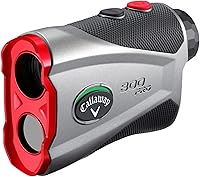
Golf Rangefinder vs Hunting Rangefinder: Key Differences
A golf rangefinder adds slope, a flag lock and a cart mount, while a hunting rangefinder such as the Vortex Crossfire HD 1400 doesn't describe those golf features. For a course, pick a golf model, and treat a hunting model as a different tool.
On this page (15 sections)
- What the two rangefinders have in common
- What a golf rangefinder is built to do
- What a hunting rangefinder is built to do
- Pin seeking and the flag lock
- Slope: the gap a hunting model leaves open
- A par 3 with each unit
- Cart use and carry
- Magnification and the flag in view
- The display on a golf course
- Warranty and what comes in the box
- The spec table for a golf and a hunting unit
- If you already own a hunting rangefinder
- Four questions to ask of any rangefinder you'd use on a course
- Who should buy which unit
- Golf rangefinder or hunting rangefinder: which to buy
A golf rangefinder and a hunting rangefinder can both measure distance, but slope, a flag lock and a cart mount are what make one fit a golf course. For golf, buy the golf model.
We compared the Bushnell Tour V6 Shift with the Vortex Crossfire HD 1400, which Vortex builds for hunters. We looked only at the features that matter on a golf course.
If you're choosing your first golf model, start with how to choose your first golf rangefinder. The golf rangefinders buying guide covers each type.
 Best for slope and flag lock on the course
Bushnell Tour V6 Shift Golf Rangefinder
 Best for a general-purpose rangefinder
Vortex Crossfire HD 1400 Rangefinder
What the two rangefinders have in common
Both are laser rangefinders with a long reach and magnified optics, so both can give you a distance to a target you aim at. Bushnell gives the V6 Shift 6X magnification and up to 1,300 yd, and Vortex gives the Crossfire HD 1400 5X and up to 1,400 yd on reflective targets.
Each comes with a carry case and a battery, and each backs the unit with a manufacturer warranty. The differences that matter on a course sit in the features built around the flag, the hill and the cart.
What a golf rangefinder is built to do
A golf rangefinder is built around the flag, slope and cart use, and each of those shapes the features you see. On a course the target is usually a flagstick set among trees, bunkers and slopes, so the unit has to lock onto the flag itself.
The Bushnell V6 Shift uses a Visual JOLT flag lock, which confirms the lock with a red ring and a vibration. It also has an external slope switch and a BITE magnetic cart mount, so the unit can sit on the cart bar between shots.
Some golf models add continuous scanning, which keeps reading while you sweep across targets. Nikon describes an 8-second scan on its COOLSHOT models, but neither rangefinder in this post describes one.
For the mechanics of the reading itself, see how does a golf rangefinder work.
What a hunting rangefinder is built to do
Vortex builds the Crossfire HD 1400 for hunters, with HD optics, three target modes and a red TOLED display. Vortex doesn't describe a slope mode, a golf flag lock or a cart mount, and those gaps matter for golf.
The Crossfire HD 1400 has three target modes, Normal, First and Last, and Vortex says ArmorTek coatings protect the lenses. You can learn more about the brand on the Vortex Optics site.
Golf rangefinder range versus a hunting rangefinder
Range is the least useful gap in this pair. Vortex gives the Crossfire HD 1400 up to 1,400 yd on reflective targets, and Bushnell gives the V6 Shift up to 1,300 yd.
Both reach far past any approach shot on a course. A longer range does nothing for a flag that sits well inside the reach you already have.
Pin seeking and the flag lock
A flagstick is a thin target, and trees or bunkers often sit behind it. Pin seeking means the unit favors the flag over those background objects, so the reading lands on the pin.
Bushnell pairs Pinseeker with Visual JOLT, and that pairing tells you the lock is on the flag. Vortex describes three target modes instead, which set how the unit picks a target when several objects sit in view.
Read the Vortex manual to see what each mode does before you rely on it on a course. If you're new to aiming at a flag, how to use a golf rangefinder, step by step walks through it.
Why a golf model reads a flagstick better
A flagstick is thin, so a laser pointed at it can easily read the trees or bank behind it. Golf models add features meant to settle that, such as a flag lock that confirms the pin and a priority setting that favors the closest object.
Nikon's COOLSHOT models, for example, use First Target Priority to keep the reading on the closest object instead of the background. Bushnell's answer is Pinseeker with Visual JOLT, which tells you with a red ring and a vibration that the flag is what you measured.
Vortex describes target modes instead. On a course you'd rely more on your own aim to be sure the number belongs to the flag.
Slope: the gap a hunting model leaves open
Slope is the biggest gap, because the Bushnell gives slope-adjusted distances and Vortex doesn't describe a slope mode. Slope adds an angle-based adjustment for uphill and downhill shots, so the number on the screen changes with the ground.
Say a flag sits above you on a rise. The straight-line number shows how far away it is, and the slope-adjusted number shows how far it plays, which is why an uphill shot may call for more club.
Bushnell says the external switch lets you toggle slope on or off, which is how you'd play a round where slope isn't allowed. The Rules of Golf allow distance measuring by default, and a committee can prohibit it.
Slope readings aren't allowed in a round unless the committee permits them, so check the local rule. Our legal rules post covers how the Rules of Golf treat slope.
If you want to compare slope models, see best golf rangefinders with slope.
A par 3 with each unit
Picture a par 3 with the flag on a shelf above the tee. With the Bushnell, you lock the flag, feel the vibration, and read a slope-adjusted yardage for the uphill shot.
With the Vortex, you get a distance to whatever the laser reads, and you judge whether that's the flag. Vortex doesn't describe a slope adjustment, so you'd read a straight number and make the adjustment yourself.
You choose the club either way. The golf unit hands you more of the information for that choice.
Cart use and carry
The Bushnell adds a magnetic cart mount. That makes the mount the main reason a golfer would choose it over the Vortex.
Bushnell says the BITE mount sticks to a golf cart or any metal surface, with quick one-handed grabs. Vortex lists a soft carry case, a bungee cord lanyard and a wrist lanyard hook for the Crossfire HD 1400, but not a cart mount.
For a round on a course, the golf features still favor the Bushnell.
If you don't ride a cart, our guide to putting a rangefinder on a golf bag or cart covers other ways to keep one within reach.
Magnification and the flag in view
The Bushnell is 6X and the Vortex is 5X, so the Bushnell makes the flag look a little larger. One step of magnification is modest, but it can help when the pin sits behind a bunker lip or a tree line.
Magnification doesn't change the range or the flag lock, so treat it as a comfort feature rather than a deciding one.
The display on a golf course
Vortex says its red TOLED display keeps the readout clear in any lighting. That's worth having on a bright course or a shaded fairway.
Bushnell doesn't describe a display type for the V6 Shift, so we can't compare the two screens directly.
Warranty and what comes in the box
Vortex backs the Crossfire HD 1400 with an unlimited, unconditional lifetime warranty, while Bushnell backs the V6 Shift for two years. The terms differ in length, so read both before you buy.
The V6 Shift comes with a premium carry case, a battery, a quick-start guide and a microfiber cloth. The Vortex comes with a soft carry case, a lens cloth, a CR2 battery, a bungee cord lanyard and a wrist lanyard attachment.
The spec table for a golf and a hunting unit
The table shows range, magnification and what each unit is built for. The Vortex has the longer stated range, and the Bushnell has the higher magnification and the golf features.
| Product | Best for | Range | Magnification | Built for | Our score |
|---|---|---|---|---|---|
| Bushnell Tour V6 Shift Golf Rangefinder | slope and flag lock on the course | Up to 1,300 yd | 6X | Golf, with slope and flag lock | 8.7 |
| Vortex Crossfire HD 1400 Rangefinder | a general-purpose rangefinder | Up to 1,400 yd on reflective targets | 5X | Hunting | 7.1 |
Our scores reflect golf fit, so the Bushnell's slope, flag lock and cart mount count for more than the Vortex's range. The Vortex may still suit a golfer who wants a light unit and doesn't need golf features.
If you already own a hunting rangefinder
A hunting unit can still give you a distance on a course, but it won't confirm the flag lock or adjust for slope the way a golf model does. Aim from a steady stance and check that you've hit the pin and not the trees behind it.
Whatever device you carry, check the local rule before a round that matters. A golf model with a slope switch gives you a way to play by that rule.
Four questions to ask of any rangefinder you'd use on a course
These four questions sort a golf model from a general-purpose one quickly. They apply to any rangefinder, not just these two.
- Does it confirm a lock on the flag, with a vibration or a visible signal?
- Does it give slope-adjusted distance, and can you turn slope off?
- Can it sit on a cart bar or clip to a bag?
- Does it show a readout you can read in bright sun and in shade?
The Bushnell V6 Shift answers the first three directly. The Vortex answers the fourth with its red TOLED display and doesn't describe the first three.
Who should buy which unit
A golfer who rides a cart and wants slope should choose the Bushnell, because the switch and the cart mount are part of it.
- You ride a cart and want slope: the Bushnell.
- You want a flag lock and slope on one unit: the Bushnell.
- You walk most holes and want a light unit: the Vortex, if you can live without golf features.
A golfer who already owns a Vortex can use it for distance on a course. A golfer who wants both a flag lock and slope shouldn't pick the Vortex, since Vortex describes neither.
Golf rangefinder or hunting rangefinder: which to buy
Pick the Bushnell Tour V6 Shift for golf if you want slope, a flag lock with a vibration and a cart mount. It's the better buy for any golfer who plays a course.
Pick the Vortex Crossfire HD 1400 only if you already own it, or if you want a light unit and don't need slope or a cart mount. In that case, know that it's a hunting rangefinder and the golf features aren't part of it.
If a phone app is the other option you're weighing, our app versus real rangefinder comparison covers that choice.
Frequently asked questions
Can a hunting rangefinder work for golf?
It can measure distance, so it can give you a yardage on a course. The gap is in the golf features: Vortex doesn't mention slope, a flag lock with a vibration or a cart mount for the Crossfire HD 1400, so a golf model is the better fit.
Why do golf rangefinders have slope?
Slope mode measures the angle to the target and gives an adjusted distance for an uphill or downhill shot, which helps with club choice. Slope readings aren't allowed in a round unless the committee permits them, so check the local rule before you play.
Does a golf rangefinder need a flag lock?
It helps, because a flag lock confirms you've read the flag and not the tree or bunker behind it. It matters most when the pin sits among trees or hazards, and Bushnell says the V6 Shift confirms the lock with a vibration and a red ring.
Is the Vortex Crossfire HD 1400 a good golf pick?
Only if you already own it or want a light unit and don't need slope or a cart mount. Vortex builds it for hunters and doesn't mention slope or a golf flag lock, so a golf model is the better buy for a course.
Why does a golf rangefinder read a flagstick better?
A golf model is built around that one target. Bushnell's Pinseeker with Visual JOLT locks onto the flag and confirms it with a red ring and a vibration, while the Vortex describes target modes and a long reach instead of a flag lock.