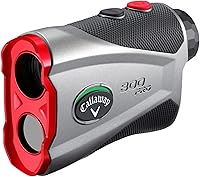
Is a Golf Rangefinder Worth It? Who Should Buy One
A golf rangefinder is worth it if you play most weeks, play courses you don't know, or want exact distances to the flag. If you play a few times a year on courses with yardage markers, a phone app may be enough.
On this page (8 sections)
- Who gets the most from a golf rangefinder
- Who can skip one and rely on the course or an app
- Laser or GPS: which one fits your round
- Does slope make a rangefinder more useful?
- Check the rules before you use one in a competition
- What a rangefinder won't do for your game
- Features that matter more than the extras
- Is a golf rangefinder worth it for you?
A golf rangefinder shows the distance to a flag, a hazard or the middle of a green, and it's worth owning if you check that number often. It can change your club choice, but only if you use it enough to matter.
This guide covers who gets the most from one, who can skip it, and when a GPS unit or a phone app makes more sense. For the full overview, start with Golf Rangefinders: The Complete Buying Guide.
Who gets the most from a golf rangefinder
Golfers who play most weeks, play new courses or want exact flag distances get the most from one. In each case, the unit replaces a guess with a number you can check.
If you play most weeks, you check distance on almost every shot. A unit on the cart keeps that check quick, and it saves the walk to a sprinkler head or yardage plate, which can also keep your group moving.
If you play new courses, a rangefinder works the same way on every hole. You don't need the course's yardage plates or a map of each green.
If you're not sure how a laser reads a target, how a golf rangefinder works explains it in plain steps.
Some lasers ride on the cart or on your belt. REDTIGER's unit comes with a magnetic strip and a magnetic belt clip, and it recharges over USB-C, so plan to charge it between rounds.
If you're buying for an older golfer or as a gift, ask what they already use before you pick a model. The best golf rangefinders for seniors and older golfers is the place to compare picks.
Who can skip one and rely on the course or an app
You can skip one if you play a few rounds a year, play courses you know well, or are happy with yardage markers and a phone app.
Many courses mark the fairways with distance plates or sprinkler-head numbers. If you already know those numbers, you may not need a device at all.
A phone app works from course maps, so its numbers depend on how the map marks each green. Golf Rangefinder App vs a Real Rangefinder compares the two side by side.
Is a golf rangefinder worth it if you play twice a year?
If you play only a few rounds a year, you'll use the unit on far fewer shots, so a simple model or the course markers may be enough.
If you want to try a unit without chasing extras, Best Budget Golf Rangefinders That Still Work Well covers budget models.
Laser or GPS: which one fits your round
A laser rangefinder fits golfers who want the distance to one target, and a GPS unit fits golfers who want front, center and back numbers on every hole. Pick the one that matches the number you check most often.
A laser aims at the flag, a tree or a bunker edge and reads the distance to that object. A GPS unit uses course maps, so it gives yardages to the green without any aiming.
A GPS watch is a third route, and golf rangefinder vs GPS watch compares it with a laser. If you want a laser and course yardages in one unit, a golf rangefinder with GPS is the option to compare.
Does slope make a rangefinder more useful?
Slope matters most on hilly courses, where a shot uphill or downhill plays longer or shorter than its flat distance. A slope switch lets you choose between the flat number and the slope-adjusted one.
Is a golf rangefinder worth it on a hilly course?
If your course has big elevation changes, the slope-adjusted number can change your club choice. On a flat course, slope adds little, so a unit without slope may do the job.
Set the slope mode before you tee off, and keep it the same for the whole round so your numbers stay consistent. The rules section below explains when that choice matters in a competition.
Check the rules before you use one in a competition
Distance measuring is allowed by default under the Rules of Golf, but a committee can prohibit it, and slope readings aren't allowed in a round unless the committee permits them. The slope switch on the unit doesn't settle the question.
The Rules of Golf are written by the USGA and the R&A, and a club can add its own local rules. Read the event notice before the round, and ask the committee if the notice is unclear.
What a rangefinder won't do for your game
A rangefinder tells you the distance to one target, and that's all. It doesn't pick the club, read the wind or fix a swing.
You still need to know how far you hit each club. Note your carry distances over a few rounds, then match the number on the display to the club that flies that far.
Use the number to commit to a shot instead of second-guessing it. That's where the unit earns its place on the cart: fewer guesses on every approach, not a lower score by itself.
Features that matter more than the extras
Look first at slope, magnification, a magnetic mount and a flag-lock vibration, since those shape how you use the unit on every hole.
Magnification is how much bigger the flag looks through the lens. The REDTIGER has 7X magnification, while the Callaway and the Bushnell Tour V6 Shift both have 6X.
Flag lock is the feature that tells you the unit has found the flag. Callaway says its Pin Acquisition Technology locks onto a pin up to 300 yards away, and a short vibration confirms the reading.
Magnetic mounts and weather
All four products in this guide have a magnet for the cart: Callaway's Magnahold, REDTIGER's magnetic strip, and Bushnell's BITE mounts on the V6 Shift and the Phantom 3 Slope. Water ratings differ by model, so check the label if you play in wet weather.
A rangefinder built for hunting can look like a golf unit. Golf Rangefinder vs Hunting Rangefinder: Key Differences explains the differences before you buy.
If you play only a few rounds a year, you may not need the longest range or the most features. Best Golf Rangefinders for the Money covers that middle ground.
Is a golf rangefinder worth it for you?
Buy one if you play most weeks, play new courses or want exact flag distances. Skip it if you play rarely and your course markers or a phone app already do the job.
Pick a laser with slope if your course is hilly and you play often.
Pick a GPS unit if you want front, center and back numbers on every green without aiming.
Pick the course markers or an app if you play a few times a year on a course you know.
If you're still unsure which model fits, start with How to Choose Your First Golf Rangefinder, which covers the questions to answer before you compare models.
Frequently asked questions
Is a golf rangefinder worth it for a beginner?
It can be, if you want a real distance to the flag while you learn your yardages on the course. A beginner who plays once a month may get more from a few lessons, so start with a simple laser and add extras only when you find yourself using them.
Can I use a golf rangefinder in a competition?
Distance measuring is allowed by default under the Rules of Golf, but a committee can prohibit it, and slope readings aren't allowed in a round unless the committee permits them. A slope switch on the unit doesn't settle the question, so check the local rule.
What is the difference between a laser rangefinder and a GPS unit?
A laser rangefinder measures the distance to the object you aim at, such as a flag. A GPS unit uses course maps to show the front, center and back of the green without any aiming, so choose based on whether you need one target or every green.
Does a golf rangefinder lower my score?
A rangefinder gives you a number, but it does not hit the ball for you. It helps most when you use that number to choose a club and then commit to the shot, since your swing, course and practice still shape your score.
Can a phone app replace a rangefinder?
For some rounds, yes, because a course app gives distances from maps. A laser reads the object you aim at, which helps on a tucked pin or an unfamiliar course, so an app may be enough if you play only a few times a year.